

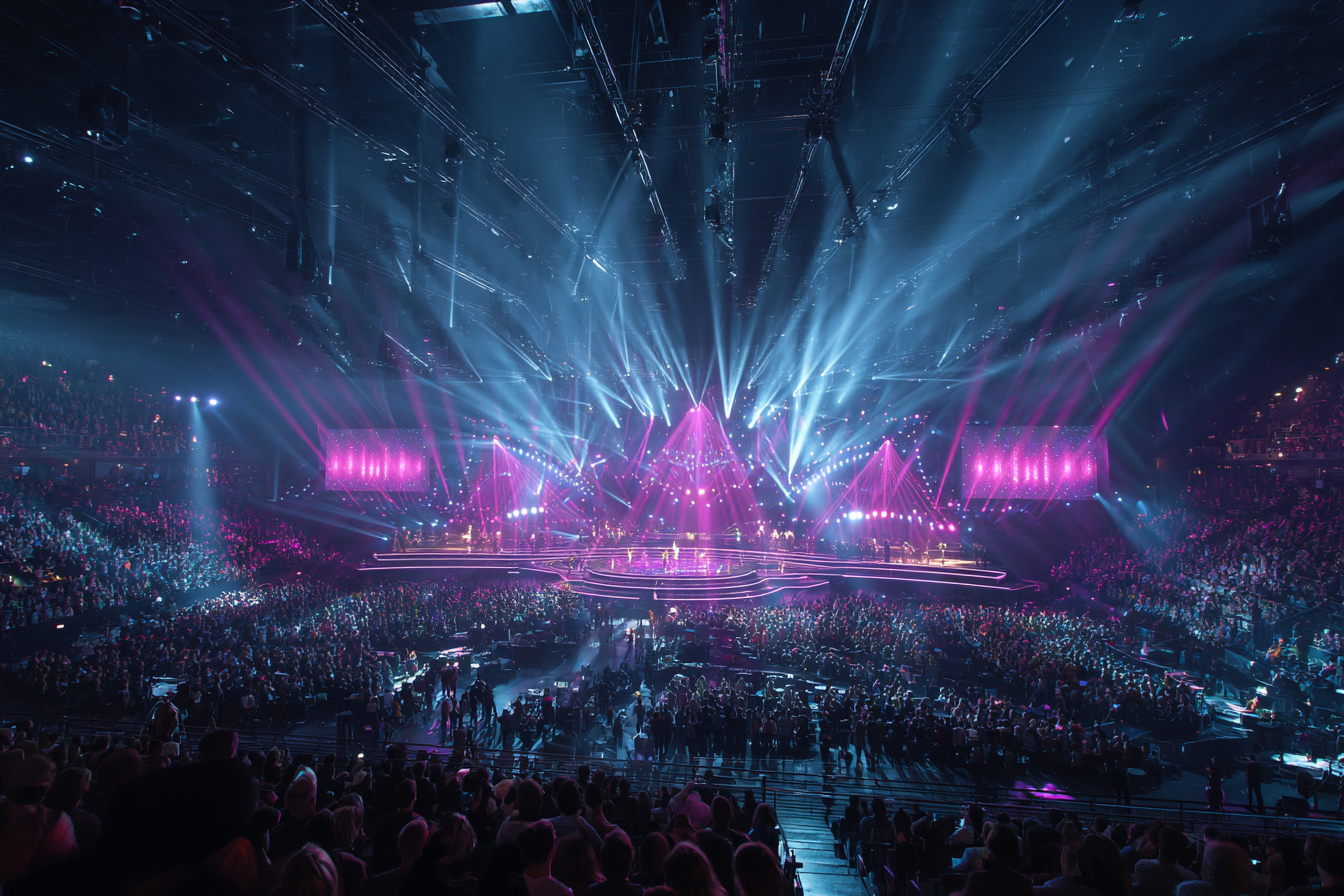
Melodifestivalen, Sweden’s national selection for the Eurovision Song Contest, drew a record 4,077 song submissions for 2027, and broadcaster SVT expects a fair number of them were made with AI. It isn’t banning them.
Project manager Anders Wistbacka told the Sweden Herald that SVT doesn’t want to be first to set the rules and will follow whatever the music industry decides. SVT also doesn’t run detection software on submissions, so it can’t say how many entries involved AI. Screeners rely on instinct instead, flagging patterns like an unfamiliar songwriter sending in a large batch of songs across many genres.
That puts Sweden at odds with Greece, where broadcaster ERT banned AI outright in its call for entries for Sing for Greece 2027. Two national selections feeding the same contest are now operating under opposite policies.
Despite headlines suggesting Sweden could send an AI song to Eurovision, Wistbacka called a fully AI-generated winner unlikely. Every song still needs a performer, entries pass through several rounds of assessment before 30 are chosen to compete, and the live show is the heart of the format.
In his words, “It will not be a computer going up on stage and singing.”
That’s the more useful detail for the AI music space. SVT is drawing its line at the stage, not the writing session, which effectively treats AI as a songwriting and demo tool rather than a performer. In one of the world’s most productive pop songwriting countries — and one that's tied for the most Eurovision wins — that’s a quiet green light for AI in the writing room, as long as a human carries the song.
The pressure point is volume. Wistbacka warned that if submissions reach 10,000, SVT will need a bigger budget — and new technology — just to listen to everything.