

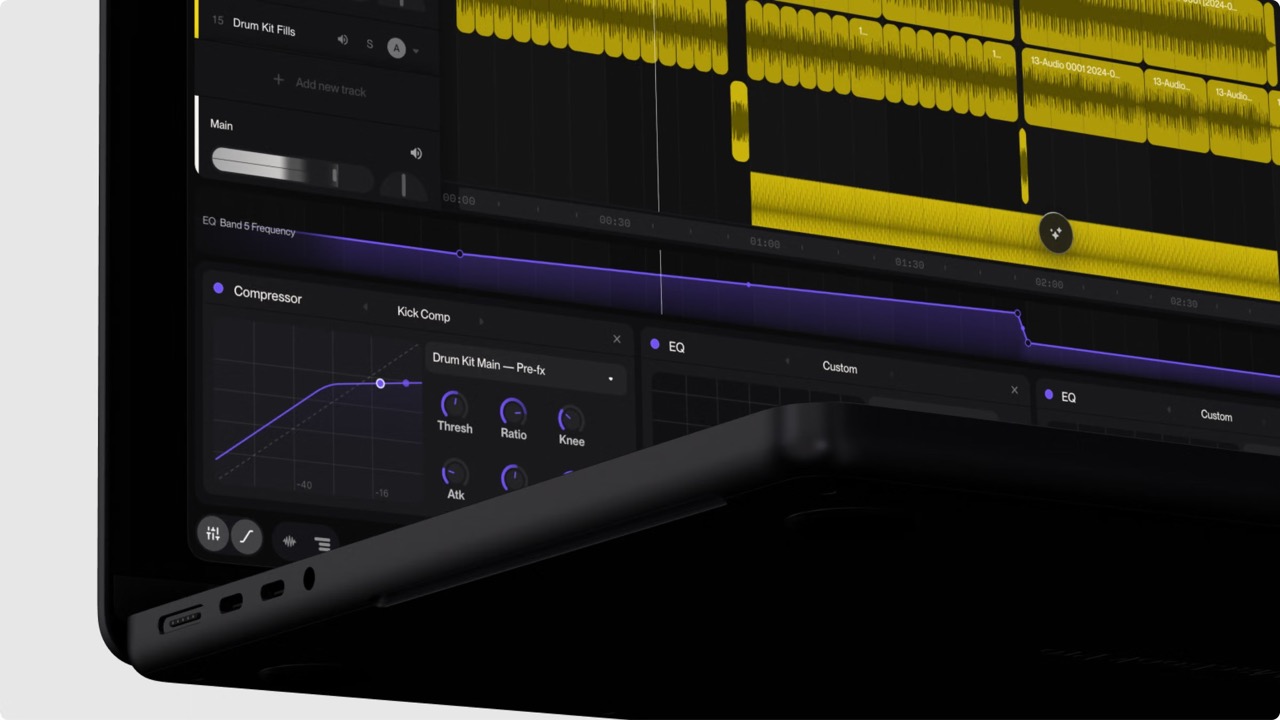
Suno has launched an educational series on its blog, and the first lesson is one every producer learns early: what a compressor actually does. The Sept. 22 post, from Chris Mayes-Wright of Suno's Studio team, walks through dynamic range, how threshold, ratio, attack and release shape a sound, and why compressed audio reads as louder even when the peaks don't change. Suno promoted it on Discord this weekend and said EQ is next week's topic.
The series exists because Suno Studio now has something to teach. Studio 2.0, which shipped Aug. 13, added a built-in effects chain of compressor, EQ, reverb, convolution, delay, distortion and gate, along with MIDI, automation, a wavetable synth and chat-built custom plugins. Suno has kept refining it since, including a MIDI pipeline upgrade this month. Studio doesn't support VST or Audio Units plugins, so the built-in tools and chat-designed effects are the whole toolbox, and Studio remains Premier-only.
The post is most pointed about raw audio. Suno says the compressor matters most when users upload or record their own material onto the timeline, where uneven levels can bury detail. It also previews sidechain compression, the pumping effect common in dance music, as the subject of a future post.
The advice worth underlining is the warning against overcompression, which the post says can squeeze the life out of audio. That matches what Zinstrel found when it blind-tested five AI mastering services on Suno tracks: the automated masters optimized for loudness and brightness, and only the human master restored dynamic range. Suno's own tip, to mix with your ears and stop tweaking when it sounds good, is the same lesson.
The bigger signal is where Suno is steering its users. A generator that shipped finished-sounding songs is now teaching production fundamentals, betting that its most engaged subscribers want to shape a mix rather than just prompt one. Knowing when not to reach for a compressor is exactly the kind of taste a prompt can't supply, and the kind that will separate Studio users over time.