

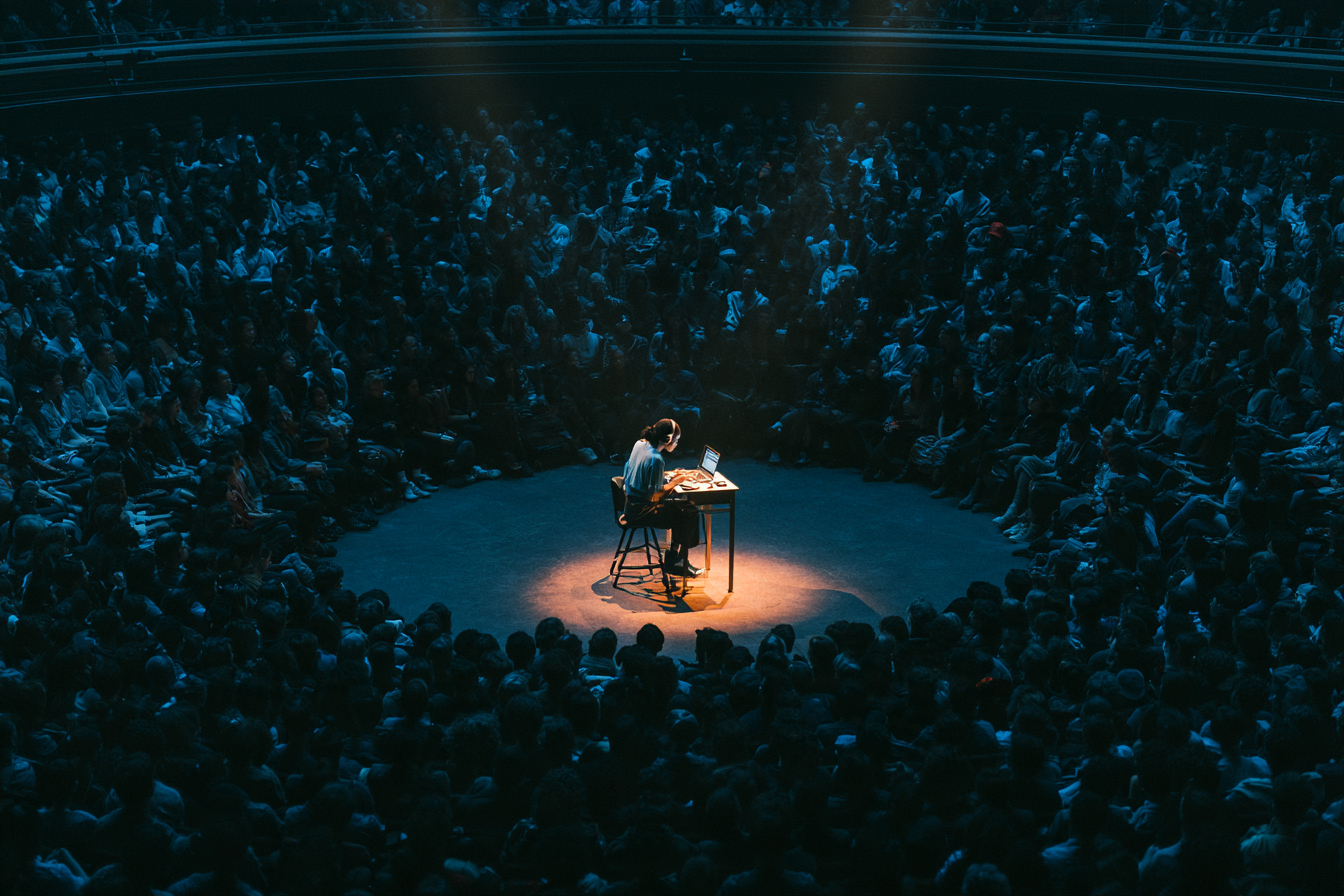
I’ve been scouring the depths of the AI music scene for the last few years. I’ve been creating music and finding artists who have become personal favorites of mine. I’m at the point where I get excited to listen to new releases from certain AI artists, and I love to see how their styles and sounds change from release to release.
One comment I notice and hear time and time again on social media, in forum posts, and in conversations is “good luck performing it live for someone.”
It’s usually presented as a final verdict, as though the stage is where a recording must eventually prove its worth. But that assumes the artist wants to get there.
I really don’t think that is the case for everyone.
Now don’t get me wrong. I think many AI and AI-assisted artists will find ways to perform parts of their songs and catalogues. The possibilities interest me. But the ability to perform and the desire to perform are separate questions, and we keep treating them as one.
I talk to my wife about this a lot. She works in the live music industry, while I tread the waters in the emerging one. Our conversations keep bringing me back to how differently people can participate in music. A recording, a concert, and the act of writing a song offer different experiences. We don’t have to collapse them into a single career path.
For most AI artists I’ve spoken with, being able to create music, see their words come to life, hear their thoughts, and make something they want to play on repeat is more than they ever expected. Some do want the spotlight and the experience of touring. Others have spent their lives behind the scenes and are happy finally having their foot in the door of creation.
That satisfaction deserves to be taken seriously. We tend to describe creative success through its next commercial step: a release should lead to an audience, an audience to ticket sales, ticket sales to a tour. But an artist can have ambitions for the work without having ambitions for a life on the road.
Most AI artists I’ve talked to have considered performing to some degree. Yet they usually start by telling me they want to create stories or tell their own. They want to create worlds and build albums. They want to write.
The recording is often the thing they wanted to make in the first place. Hearing it finished is an arrival.
AI music has created a powerful outlet for these individuals and groups. Many may never walk onto a stage and give a traditional live performance. That places a limit on one part of their musical lives. It doesn’t tell us how much care went into the recording, whether it moved a listener, or whether they have something worth saying.
And for those who do want to present the work to an audience, our expectations of a music event may continue to expand.
Venues such as The Sphere in Las Vegas put enormous emphasis on visual experience. That doesn’t make every audiovisual presentation a live performance. It does remind us that people buy tickets for more than the physical execution of notes. They come for scale, atmosphere, narrative, and the feeling of experiencing something together.
Maybe the music is recorded while the visual performance changes in the room. Maybe musicians reinterpret an AI-assisted album onstage. Maybe music and film become more closely connected, creating experiences that sit somewhere between a screening and a concert.
Those distinctions are worth keeping clear. Audiences should understand what is being performed, what is prerecorded, and where the human decisions are happening. From there, they can decide whether the experience is worth their attention.
The word “musician” raises a related question. Someone who plays guitar and sings has skills that someone working entirely through software may not possess. Those differences matter, especially when the job is to perform. But music has always involved people whose contributions differ: writing, arranging, producing, playing, and shaping the finished recording.
AI adds another contested role to that collaboration. We’ll understand it better by looking closely at what a person contributes than by asking every contributor to demonstrate the same skill.
Hell, maybe the goal for many of these artists has always been to create the best music they can. Those who already play instruments may have an advantage with the new tools. They can import their own sounds and draw on their understanding of composition and production. That knowledge gives them more ways to make decisions and solve problems.
Others are starting with words, stories, or an idea they have never been able to hear outside their own heads. They still have creative decisions to make, and the results should be open to criticism. A song can be dull, an album incoherent, a lyric unconvincing. There is plenty to discuss in the work itself before we get to whether its creator could take it on tour.
“Good luck performing it live” sidesteps that discussion. It tells us what the artist may be unable to do in another setting, while leaving the recording largely unexamined.
AI music can be performed. Whether an artist wants to perform it is a different question.
Creators can collaborate with musicians, learn instruments, develop audiovisual shows, or stay entirely within recorded work. Those paths demand different skills and offer different rewards. I think that variety could grow the music industry in ways we aren’t yet considering.
What does that mean for live music and the artists who do want to perform and tour? I think the qualities specific to live performance could become more valuable. Hearing someone control a voice or instrument in the room, respond to other players, and take a risk in front of an audience offers something a finished file cannot provide.
I also think we’ll see some AI artists who started with a laptop pick up an instrument because making music has made them curious about playing it. Others will find collaborators who can bring their recordings into a room. And some will keep writing and releasing music without ever wanting the stage.
For those artists, the useful questions are already there: Did they make something worth hearing? Does it reward another listen? Does the next release give us a reason to come back?
Those are the questions I’m asking when a new album from one of my favorites arrives. I’m listening for where they’ve gone with the music. I’m not waiting for a tour announcement to decide whether it counts.