

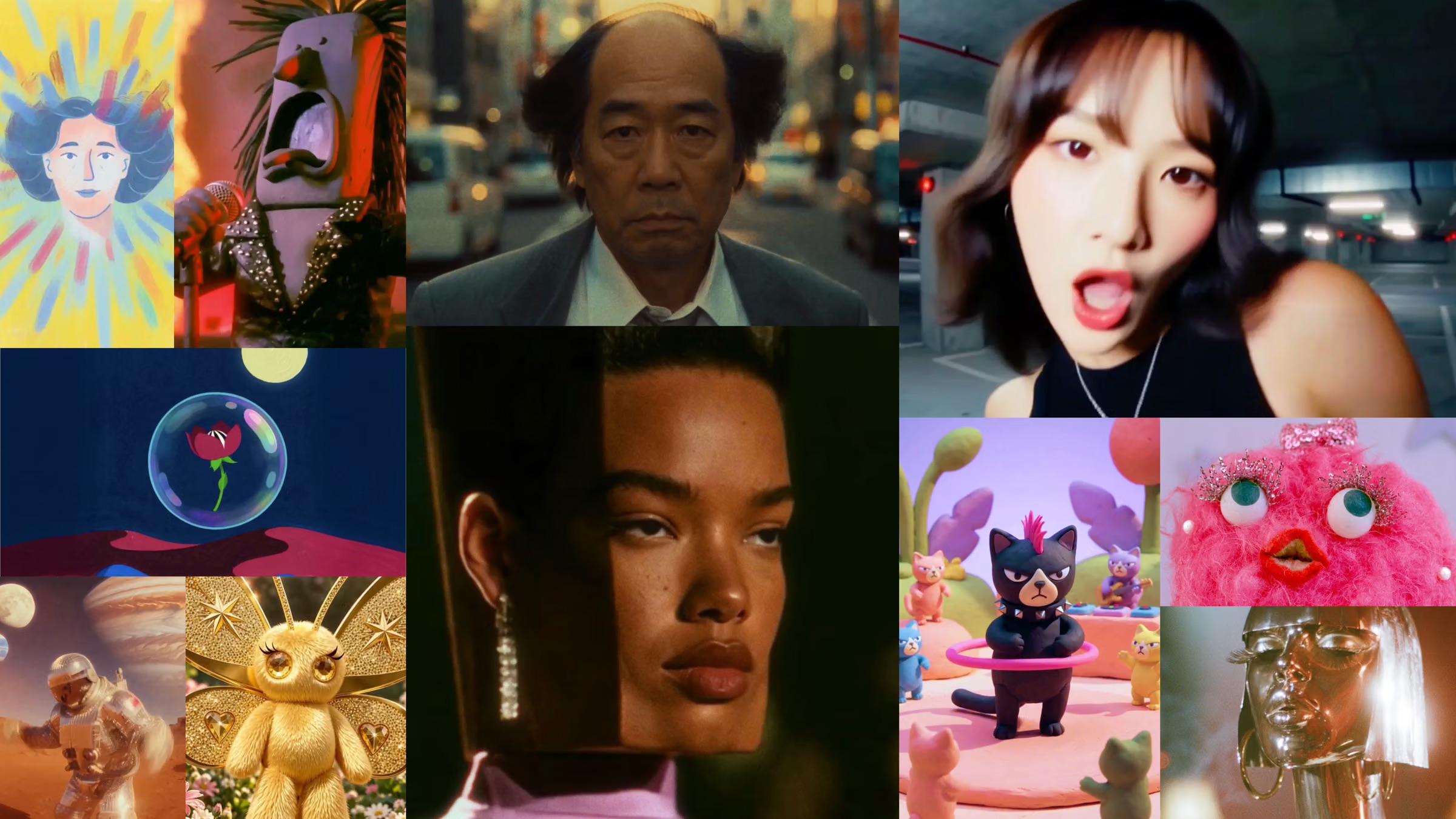
Suno introduced Visuals on Tuesday, a new tool that turns songs in a user’s library into music video clips, lyric videos, album art, and video built from photos. It launched the same day on web, iOS, and Android.
In the announcement, Chief Product Officer Jack Brody said video generation had been too slow and too expensive for anyone but enterprises until a new generation of models made it practical for everyday creators. Suno says it optimized the model behind Visuals for music, though the post does not name the model or its provider.
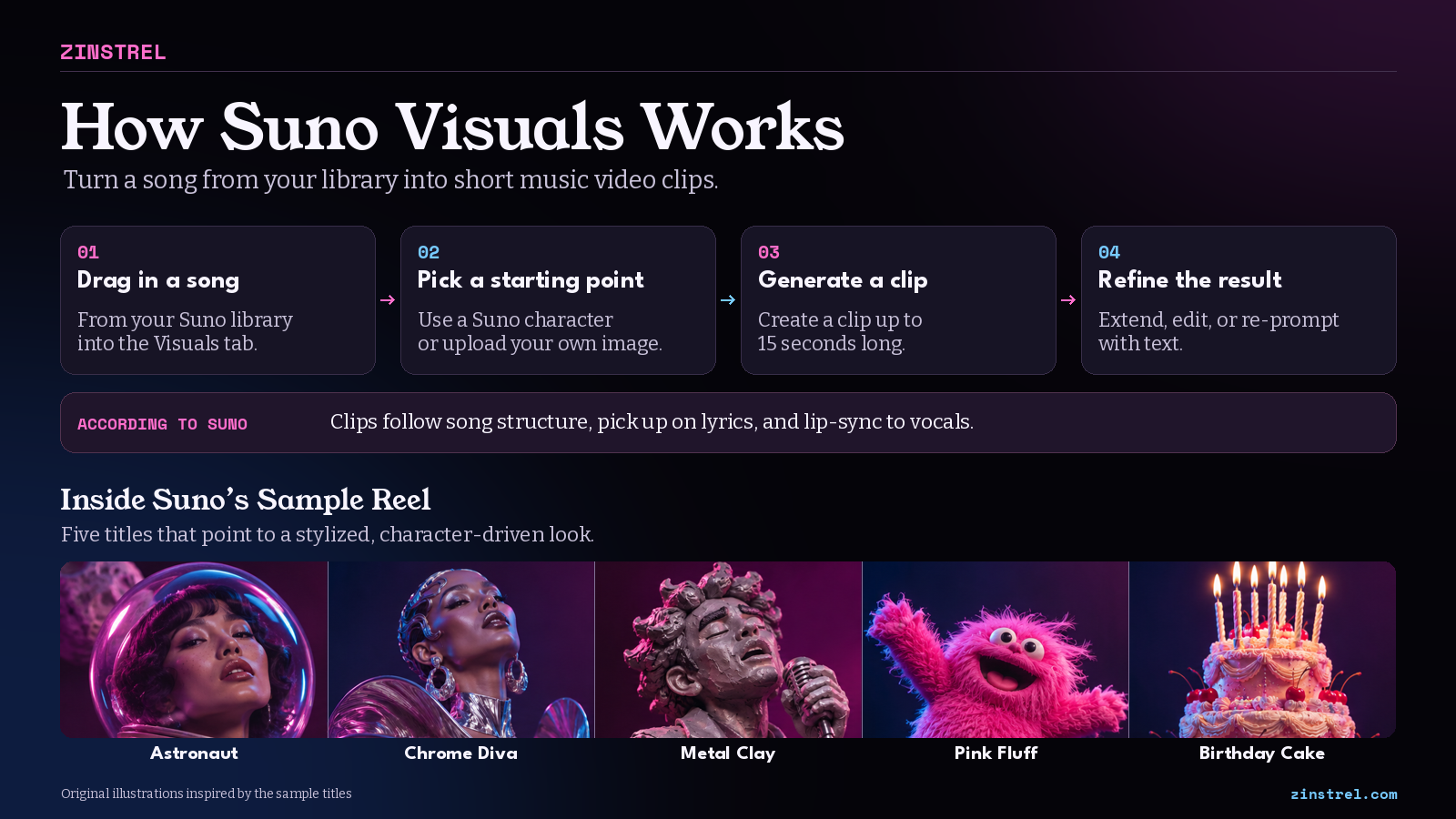
The workflow starts by dragging a song from a Suno library into the Visuals tab. From there, a user generates clips of up to 15 seconds, then extends, edits, or re-prompts them with text. Starting points include one of Suno’s original characters or an uploaded image.
According to Suno, the clips follow a song’s structure, pick up on its lyrics, and lip sync to the vocals. The sample reel on the post includes clips titled Astronaut, Chrome Diva, Metal Clay, Pink Fluff, and Birthday Cake, which suggests a stylized, character-driven look rather than live-action realism.
Visuals runs on its own credits, sold separately from song credits at suno.com/pricing/visuals. The post does not say what a clip costs, whether any free usage exists, or which plans include it. It also leaves out resolution, daily caps, and export formats, all of which will matter to artists hoping to upload finished videos to YouTube or TikTok.
Much of the announcement is about guardrails. Text and visual filters block prompts and uploads that try to depict specific artists, public figures, copyrighted works, or other IP, and Suno warns that prompts that work on other video platforms may not work here, by design.
Generated videos and images are screened against Community Guidelines, and embedded watermarks are applied before anything can be shared off-platform. Suno also says it continues working with Audible Magic, ACRCloud, and Musixmatch to block uploads containing copyrighted audio. First-time uploaders are asked to confirm they hold the rights to their file.
The reaction on r/SunoAI, the company’s official subreddit, has been largely skeptical. Many posters tie their frustration to the core audio product, citing complaints about v6 vocal quality, anticipation for v6.5, and nostalgia for earlier versions, and some question why effort is going to video at all.
The sharpest pushback targets the separate credits, per-clip costs, resolution and tier limits, and what several call cash-grab mechanics. In one thread, original poster u/Witty-Exercise7715 described spending roughly $15 on multi-minute clips with no low-cost way to redo a bad result, calling it a “financial trap” and a gamble. Commenters pointed to modest starter allowances, with one citing 450 credits on Premier against 220 for the original poster.
Others raised downstream problems. u/Zaphod_42007 said Suno’s filtered “H3 Move” builds on the open-source Minimax H3 model and generates two clips at once, a claim Suno has not confirmed. u/TheArkPhoenixProject reported spending 450 credits only to be blocked from publishing on Suno because their track was already on streaming platforms. u/HuntersPad warned that uploading AI videos contributed to a three-month demonetization setback on an established YouTube channel.
The response was not uniform. Some users praised the lip sync, the graphics, and the ease of casual clip creation, and argued that short visuals serve a real promotional purpose. u/Unlikely-Mobile-5343 maintained that social content is essential to modern music promotion and still compares favorably with outside production costs.
u/Cold-Airport-5553 cited a Spotify fan study and favored six-to-eight-second loops or 9:16 shorts over error-prone full-length videos, while u/redkinoko credited consistent lyric reels with rapid follower growth on Facebook. Even so, many creators said they would hesitate to spend credits on hit-or-miss generations, and are leaning instead on local ComfyUI setups, Grok, Seedance, Veo 3.1, or free short clips from chatbots.
Visuals follows Suno’s Speech beta in October and Suno Bridge on Nov. 13, and it fits the company’s stated push toward “creative entertainment” beyond music alone. A 15-second ceiling means a full music video is still an assembly job, but for artists who have been stitching together clips from several tools, having video generated against the song itself, inside the same library, is a meaningful convenience.
It's a stretch to call it a replacement for a human director, and Suno doesn’t claim that. Whether it becomes more than a promotional-clip machine depends on pricing, which the announcement left out and which has already become the main complaint among Suno’s own users.
Suno’s full announcement is at suno.com/blog/introducing-visuals, and the tool is live at suno.com/visuals.